Junior Make-A-Thon (JMT) 2027
India’s Most Rigorous Maker Hackathon
By
IIT Madras, Shaastra Tech Fest
Hackathons, are collaborative events where teams work to solve a problem or create a new product mostly using software tools only. So what makes a Makeathon? Ah, it’s a hackathon with the focus on solving problems with solutions that involve ‘making’, that is design and prototype working models.
And Junior Make-A-Thon (JMT) is a Pan-India Makeathon from Shaastra IIT Madras for inspiring middle & high-schoolers to build solutions to the challenges & opportunities towards a developed India@2047.
Why JMT 2027?
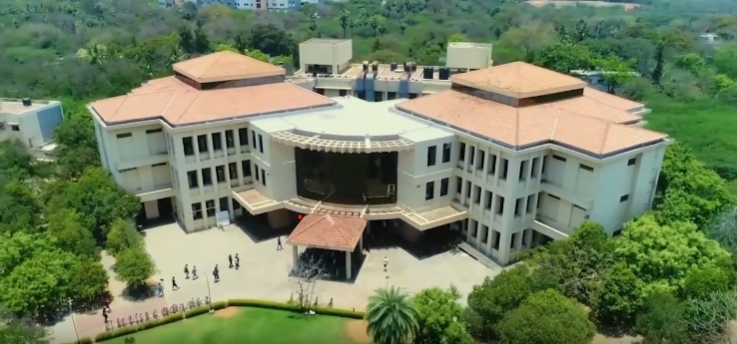
JMT, a flagship event of Shaastra aimed specifically for middle and high school innovators of, the annual Tech Fest of IIT Madras now in its 28th edition brings together entertainment, exhibitions, workshops, competitions with thousands of students in attendance from across the country. Bringing together leaders from Industry, Academia and the Government, it starts with pre-events in September 2026 and culminates in a grand finale at IIT Madras campus from 2nd to 6th January 2027. The JMT has two categories for students to participate: Juniors ( Grades 6 – 8) and Seniors ( Grades 9 – 12).
Towards a Viksit Bharat @ 2047 : The Challenge Themes for JMT 2027
To realise the vision of Viksit Bharat @ 2047, focused attention and innovation in critical domains will be essential to India’s growth, security, resilience and prosperity. A strong and productive nation needs Healthcare that is accessible, affordable, preventive and capable of reaching every citizen. Food Security must ensure that India can sustainably produce, protect, store and distribute nutritious food while strengthening farmers and building resilience against climate and supply-chain disruptions. Safety & Security must protect people in their homes, schools, workplaces, roads and public spaces, while preparing the nation for natural disasters and emerging threats across land, air, water and cyberspace.
At the same time, Smart Mobility must enable people and goods to move safely, efficiently, sustainably and inclusively across a rapidly developing India. Manufacturing must become smarter, safer, more productive and sustainable, strengthening self-reliance, creating employment and positioning India as a globally competitive innovation and manufacturing hub. Across each of these domains, emerging technologies such as Artificial Intelligence, IoT, Robotics, Automation, Computer Vision and other frontier technologies create opportunities to rethink existing problems and build solutions for the India of tomorrow.
JMT 2027 is a platform for today’s middle and high-school students—the citizens and innovators of 2047—to begin this journey. Students will choose a domain that inspires them, immerse themselves in understanding a meaningful real-world problem, ideate innovative possibilities, and prototype solutions that can create impact. It is an opportunity to move from imagining the India of 2047 to actually beginning to make it.
JMT 2027 is the platform through which we build awareness, understanding and action in our future citizens and current middle and high-schoolers. This is where they will dig deep in one of these domains of their choice, immerse to build awareness, ideate to design innovative solutions and prototype to make
them a reality. This is the platform for you to start your true journey of making the India @ 2047. These are the domains along which you will be challenged to bring out you best.
Safety and Security
Safety and security are critical enablers of the Viksit Bharat 2047 vision, closely linked to economic opportunity, social inclusion, national resilience, and the protection of people across physical and digital spaces. Safe campuses, roads, transport systems, workplaces, homes, and public spaces enable citizens to participate confidently in education, employment, healthcare, and community life.
As India becomes more prosperous, connected, and technologically advanced, it must also prepare for evolving risks on land, air, water, and cyberspace, as well as natural disasters, industrial hazards, and emerging digital threats. Technologies such as AI, IoT, Robotics, Drones, Computer Vision, Sensors, and Data Analytics create powerful opportunities to predict risks, prevent incidents, improve preparedness, and build a safer and more resilient India.
Possible Challenges and Opportunities
- Road & Mobility Safety: Safer roads, school zones, pedestrian crossings, public transport, accident prevention, and driver-assistance systems.
- School & Community Safety: Fire and gas detection, emergency alerts, crowd safety, visitor management, and smart evacuation systems.
- Personal Safety & Security: Technology-enabled solutions for women, children, senior citizens, and vulnerable communities.
- Digital & Cyber Security: Addressing phishing, scams, cyberbullying, misinformation, deepfakes, privacy, and digital identity protection.
- Disaster Early Warning: Detecting and predicting floods, fires, landslides, heatwaves, cyclones, and other natural hazards.
- Disaster Response & Rescue: Search-and-rescue robots, drones, emergency communication, hazard detection, and rapid response systems.
- Industrial & Workplace Safety: Monitoring dangerous environments, equipment failures, gas leaks, worker fatigue, and unsafe operating conditions.
- Critical Infrastructure Safety: Protecting transport, energy, water, communication, and public infrastructure from disruption and failure.
- Inclusive Safety: Developing accessible emergency alerts and safety systems for persons with disabilities, children, senior citizens, and multilingual communities.
The opportunity for young innovators is to use technology not only to respond to danger, but to sense, predict, prevent, protect, prepare, respond, and recover—helping create a safer and more resilient India by 2047.
A nation where people can move freely, safely, and affordably is one where opportunity is truly accessible. To make this vision a reality, young innovators must design transformative solutions that reimagine
mobility, prioritize safety, and ensure we are strong and prepared for a prosperous future.
Food Security
Food security will be a critical pillar of the Viksit Bharat 2047 vision, ensuring that every citizen has access to sufficient, safe, nutritious, and affordable food. As India’s population grows and consumption patterns change, the country must improve agricultural productivity, reduce food loss, strengthen storage and distribution, support farmers, and use natural resources more efficiently.
Climate change, water scarcity, soil degradation, supply-chain inefficiencies, post-harvest losses, and changing dietary needs create both significant challenges and opportunities. Addressing these issues will be essential to building a resilient, sustainable, and inclusive food ecosystem capable of meeting India’s future needs.
Possible Challenges and Opportunities
- Crop Health: Preventing losses caused by pests, diseases, and nutrient deficiencies.
- Climate-Resilient Agriculture: Protecting crops and farmers from droughts, floods, heatwaves, irregular rainfall, and changing climatic conditions.
- Post-Harvest Losses: Reducing food loss during harvesting, handling, sorting, storage, and transportation.
- Food Storage: Preventing spoilage, pest damage, contamination, and deterioration during storage.
- Food Waste: Reducing avoidable food waste in homes, schools, restaurants, markets, retail outlets, and institutions.
- Food Quality and Safety: Ensuring that food reaching consumers is safe, fresh, hygienic, and free from adulteration.
- Farm Labour and Productivity: Addressing labour shortages, repetitive tasks, and productivity challenges in agriculture.
- Urban Food Production: Exploring ways to improve food availability in rapidly growing towns and cities with limited space.
- Nutrition Security: Addressing malnutrition, micronutrient deficiencies, unhealthy diets, and unequal access to nutritious food.
- Supply-Chain Resilience: Reducing disruptions in the movement of food during emergencies, disasters, extreme weather, or other crises.
- Agricultural Waste: Reducing crop residue, processing waste, and other forms of agricultural waste.
- Livestock and Dairy Productivity: Improving animal health, productivity, feed management, and reduction of losses.
- Fisheries and Aquaculture: Improving productivity, sustainability, storage, and distribution across fisheries and aquaculture.
The opportunity for young innovators is to rethink how India produces, protects, stores, distributes, consumes, and conserves food, helping build a food-secure and resilient India by 2047.
Healthcare
Healthcare is essential to achieving the Viksit Bharat 2047 vision, as a healthy population is the foundation for productivity, learning, economic growth, and social progress. Access to quality and affordable healthcare can improve outcomes for children and youth, reduce financial burdens on families, strengthen women’s health and well-being, and ensure that people across rural and urban India have a better quality of life.
As India’s population grows and health needs become more complex, improving access, affordability, prevention, early detection, emergency care, and continuity of treatment will become increasingly important. The opportunity is to build a healthcare system that is more inclusive, responsive, preventive, and accessible to every citizen, while addressing the changing health challenges of a developing and ageing nation.
Possible Challenges and Opportunities
- Patient Safety in Hospitals: Reducing risks such as patient falls, missed attention, unsafe movement, and delays in responding to patients who may need assistance.
- Medication Management: Addressing missed doses, incorrect timings, medicine mix-ups, and challenges faced by elderly people or patients taking multiple medicines.
- Assisted Living for Senior Citizens: Supporting elderly people who live independently with everyday activities, mobility, health monitoring, and emergency assistance.
- Emergency Response and Ambulance Management: Reducing delays in identifying emergencies, locating patients, dispatching ambulances, and reaching appropriate healthcare facilities.
- Blood and Critical Medical Resource Availability: Improving the ability to identify and coordinate the availability of blood, medicines, oxygen, hospital beds, and other critical resources during emergencies.
- Healthcare Equipment Monitoring: Preventing critical medical equipment from becoming unavailable because of malfunction, improper usage, maintenance delays, or unexpected failure.
- Disease Outbreak Awareness: Identifying unusual patterns of illness within schools, communities, or regions so that potential health concerns can be recognised earlier.
- Healthcare in Remote Areas: Overcoming shortages of healthcare professionals, diagnostic facilities, medical equipment, and specialist access in rural and geographically difficult regions.
- Safe Movement of Medicines and Vaccines: Maintaining appropriate conditions while medicines, vaccines, blood, and other sensitive healthcare materials are stored and transported.
- Healthcare for Disaster Situations: Managing large numbers of injured or affected people when healthcare facilities and resources are under severe pressure.
- Medical Waste Management: Improving the safe identification, segregation, collection, and disposal of medical and healthcare waste.
- Hospital Logistics: Improving the movement of medicines, samples, equipment, food, linen, and other essential materials within large healthcare facilities.
- Healthcare Communication: Addressing language, hearing, literacy, and communication barriers between patients, caregivers, and healthcare providers.
The opportunity for young innovators is to rethink how India can prevent illness, improve access to care, support early intervention, strengthen healthcare delivery, and promote well-being for all, helping build a healthier and more productive India by 2047.
Smart Mobility
Smart mobility will be a key enabler of the Viksit Bharat 2047 vision, connecting people to education, healthcare, employment, markets, and opportunities across urban and rural India. Safe, affordable, accessible, and efficient movement of people and goods can improve productivity, reduce inequality, strengthen economic growth, and enhance quality of life. As cities expand and mobility needs grow, India must also address congestion, road safety, pollution, accessibility, and the efficient use of transport infrastructure.
The future of mobility will require transportation systems that are more connected, responsive, inclusive, sustainable, and resilient. From safer roads and smarter public transport to efficient logistics and emerging forms of autonomous mobility, there are significant opportunities for young innovators to reimagine how people and goods move across India.
Possible Challenges and Opportunities
- Road Safety and Accident Prevention: Reducing accidents caused by speeding, distracted driving, poor visibility, unsafe road conditions, and human error.
- Pedestrian and Cyclist Safety: Making roads, crossings, school zones, and public spaces safer for pedestrians and cyclists.
- Public Transport Efficiency: Improving reliability, accessibility, scheduling, passenger information, crowd management, and last-mile connectivity.
- Inclusive Mobility: Improving independent and safe mobility for senior citizens, children, persons with disabilities, and other users with special mobility needs.
- Parking and Urban Space Management: Reducing the time, congestion, and inefficiency associated with finding and managing parking spaces.
- Emergency Mobility: Enabling ambulances, fire services, rescue vehicles, and other emergency responders to move quickly through congested or disrupted transport networks.
- Road and Infrastructure Condition: Identifying and addressing potholes, damaged roads, unsafe bridges, poor markings, broken signals, and other infrastructure-related mobility risks.
- Traffic Rule Compliance: Addressing unsafe practices such as wrong-way driving, signal violations, dangerous overtaking, speeding, and unsafe parking.
- Last-Mile Connectivity: Improving connectivity between homes, public transport hubs, workplaces, schools, hospitals, and other important destinations.
- Mobility During Extreme Weather and Disasters: Maintaining safe movement when roads are affected by floods, heavy rainfall, landslides, extreme heat, or other disruptions.
- Vehicle Health and Maintenance: Reducing breakdowns and accidents caused by poor maintenance, component failures, or unsafe vehicle conditions.
- Driver Behaviour and Well-being: Addressing fatigue, distraction, drowsiness, stress, and other factors that can affect driver performance and road safety.
- Autonomous and Connected Mobility: Exploring how increasingly connected and autonomous vehicles can safely interact with people, roads, infrastructure, and other vehicles.
The opportunity for young innovators is to rethink how India can move people and goods more safely, efficiently, sustainably, inclusively, and intelligently, helping create a connected and accessible India by 2047.
Manufacturing
Manufacturing will be a major driver of the Viksit Bharat 2047 vision by creating jobs, strengthening self-reliance, supporting innovation, and helping India become a global manufacturing hub. As industries grow, there will be a need to make production safer, smarter, more efficient, affordable, and environmentally responsible.
For young innovators, manufacturing offers many real-world problems that can be explored through making, prototyping, automation, robotics, AI, IoT, and other emerging technologies. Students can look at how products are made, inspected, stored, transported, repaired, reused, and recycled, and identify ways to improve these processes.
Possible Challenges and Opportunities
- Manufacturing Waste: Reducing scrap, rejected products, excess packaging, unused materials, and other waste created during production.
- Detecting Defective Products: Identifying products that are damaged, incomplete, wrongly shaped, or incorrectly assembled.
- Safe Working Areas: Preventing people from getting too close to moving machines, hot surfaces, sharp tools, or restricted zones.
- Sorting Materials: Improving how different materials, components, or products are identified and sorted during production.
- Reducing Material Waste: Finding ways to reduce leftover cardboard, plastic, wood, metal, fabric, or other materials during making.
- Smart Packaging: Improving packaging so that products are protected while using less material and creating less waste.
- Moving Materials Safely: Making it easier and safer to move components or products from one workstation to another.
- Preventing Machines from Being Left On: Reducing unnecessary electricity use when machines, lights, or equipment are not being used.
- Reuse and Recycling: Finding useful ways to reuse damaged products, leftover materials, packaging, or discarded components.
- Organising Tools and Components: Preventing tools, parts, and materials from being misplaced and helping workers find what they need quickly.
The opportunity for young innovators is to explore how India can make products better, safer, faster, with less waste and smarter use of resources, helping build a more innovative, sustainable, and self-reliant manufacturing ecosystem by 2047.
The Unique Format of Junior Makeathon 2027
The focus of Junior Makeathon 2027 is to move from a nation of Jugaad to one of true innovation—an approach that begins with a deep understanding of problems before attempting to solve them over 3 rounds spread over 4 months of rigorous involvement. The journey begins with an online, scenario-based challenge, where students demonstrate their ability to think through real-world problems. This is to help the schools nominate their most appropriate teams to Round 2. The nominated teams will then be presented with a choice of India’s challenges and opportunities, from which they will pick one theme close to their heart and undertake deep in-person immersion to understand the problem, before moving to ideation and ultimately to hands-on solution prototyping.
- Online Scenario Based Challenge : The Online Scenario-Based Challenge is a Round 1 conducted within each school, where students respond to real-world situations that assess their problem-solving, empathy, ideation, technology application and maker mindset. It enables schools to identify students who demonstrate strong aptitude in understanding problems, identifying insights, exploring possibilities and thinking of practical solutions. Based on their performance, each school will nominate its top three teams from each age group category for Round 2 – Immersion & Ideation, ensuring a focused selection of teams for the next stage.
- Immersion Round: Teams choose a challenge close to their heart and set-up the task on-the-ground, in-person immersion about the problem and people affected through in-depth surveys and interviews both in-person and online, research both primary and secondary and submit online their evidence and the analysis in formats specified by JMT. This builds deep empathy and serves as the foundation for effective ideation.
- Ideation Round: Armed with a deep understanding of the problem, teams now explore various ideas before shortlisting one idea that is developed and submitted as a solution detailing the actors, technology components and interactions involved in formats specified by JMT. Team submissions are evaluated by an IIT Student panel and will be shortlisted for the finals based on the depth of their immersion and ideation details. This design sketch serves as the foundation for efficient prototyping.
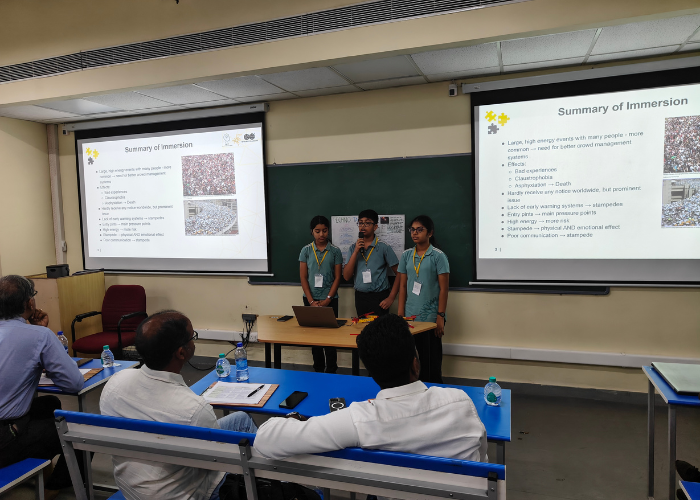
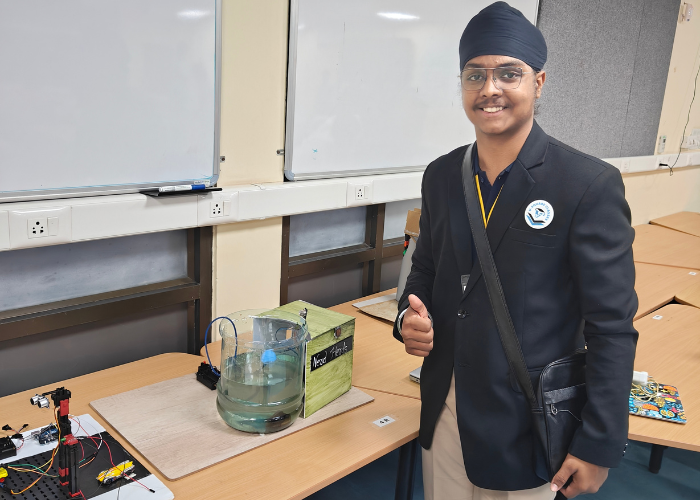
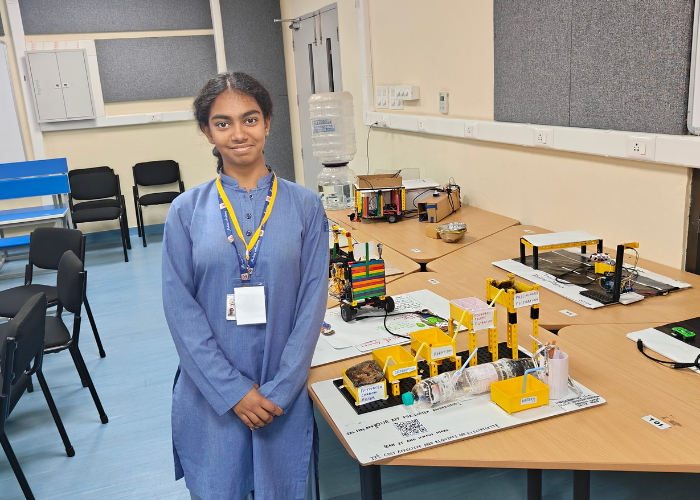
- Prototyping Round: The shortlisted top teams across India are invited to the Final Round 3 at IIT Madras for a 3-day in-person event and provided the equipment, boot camps and mentorship to help convert their designs to working prototypes that they present to a jury of industry and academia. This making of working prototypes and presenting and the consequent learning serves as the foundation for a nation of innovation.
The event columinates with a celebration of winners with prizes, certificates, memories and inspiration for everyone
Getting Started : Understanding Next Steps
- Schools will nominate a coordinator, and the coordinator will register the school.
- A webinar will be conducted for the coordinators to explain the Make-a-thon format.
- Separate challenge questions for Grades 6–8 (Juniors) and Grades 9–12 (Seniors) will be sent to the registered ID.
- As many students as possible from Grades 6–12 in the registered school can participate in Round 1.
- The assessment scores of all participating students in the Junior and Senior categories will be shared with the registered school ID.
- The scores are guidance in nature and schools are encouraged to form three teams of three members each with the participants with the top scores and nominate a maximum of three teams from each category that will work on the next stages of Rounds 2 and 3.
- Nominated teams can choose a theme from the list available on the website of CreyateforIndia, JMT and the social media handles and mailed to the coordinator.
- Nominated teams will attend webinars to understand the process of immersion and ideation and how to submit their evidence in specified formats online.
- All students from teams that complete the submission process of ideation and immersion will get digital certificates of accomplishment.
- Teams from Shaastra, IIT Madras will evaluate the submissions and shortlist the top 12 teams each from the Junior and Senior categories.
- The 12 teams in each category will have to attend bootcamps on-line and some on-site in IIT Madras during the finals to help them prototype their designs and present them to a grand jury comprising experts from academia and industry.
- The top three teams in each category: Juniors and Seniors will be awarded prizes while all finalist teams will get certificates and goodies.
Sounds Exciting!
Still have questions, check out the FAQ
1. How many people can be in one team?
Each team can have a maximum of three members.
2. Is there a registration fee for participating in JMT?
No, there is no registration fee for participating in the JMT.
3. Can teams be formed with students from different grades?
Yes, teams can be composed of students from different eligible grades provided they are of the same category and from the same school.
4. During the immersion phase, is it mandatory to interview people that represent the personas or stakeholders affected by the problem or opportunity?
Yes, it is mandatory to interview the people that represent the personas or stakeholders affected by the problem or opportunity chosen during the immersion phase. The interviews can be in-person (ideally) or online is also fine. The more interviews , the better to get an indepth understanding and build empathy.
5. Is it mandatory to record the interview with the persona?
Yes, it is mandatory to record the interviews so that you can submit them online as part of the immersion process. In case your person is not comfortable with video shooting then, the audio can be recorded.
6. Do the teams have to submit any of the recordings online immediately after the Immersion phase?
The teams can start submitting the artifacts of the immersion process and keep continuing to add if they have any new material even during the ideation phase.
7. What do the teams have to submit at the end of round 1 - Online submissions and shortlisting round?
The teams have to submit the evidence of the immersion phase as well as the ideation phase which describes the ideas they have considered and the one idea that is finalized in detail. Specific Formats for submission will be shared
8. Should the submission at the end of round 1 be in the same format as given by the JMT team?
Yes, the submission should be in the specific formats shared. Additional material like a few slides extra for immersion evidence can be shared in a specific folder called Additional Evidences.
9. Where can the teams check the results of the first round?
The results will be e-mailed to the registered Mentors’ IDs.
10. Will all the students present in the team receive the updates about the event?
No, only the registered Mentors will receive the updates and she/he will update the teams.
11. Do the teams have to present their prototypes during the Semi finals happening regionally?
No, the teams shortlisted need not present their prototypes, they have to present their finalized idea and detailed design sketch to the Jury in a 5 minute presentation format in the semi final round.There will be 30 teams invited to present in each category from each region.
12. Where will the Regional Semi finals happen?
The regional semi-finals will be conducted at NCR, Pune, Chennai, Bengaluru, Raipur and Hyderabad
13. How many teams will be selected to the finals ?
A total of 18 teams in each category ( Juniors and Seniors) will be selected to the finals for in-person prototyping and presentation at IIT Madras. These 18 teams in each category will be the top 3 from each of the 6 regions.
14. Will teams have access to the internet during the makeathon?
Yes, internet access will be available for research and development purposes during the event.
15. Do the teams have to carry any material for prototyping from their place to the finals?
No, they need not bring anything along with them. They have to make the prototype with the material provided to them at the venue. This material will reflect the same that would have been communicated during the ideation phase
16. Will the mentors/chaperones be allowed inside the work area during the makeathon?
No. The chaperones will not be allowed inside the work area. The teams will be on their own inside along with mentors from JMT team.
17. Do the students have to wear their school uniform during the event?
The students have to wear the uniform during exhibiting their prototype to the public and during presentation to the Jury on the final day.
18. Can teams work on more than one problem statement?
No, teams should work only on one problem.
19. Will accommodation be provided to them?
Will be informed to the teams one month before the event.
20. Will Food and transport be provided?
Will be informed to the teams one month before the event.
21. When can they leave on the last day of the event?
Teams can book for their return anytime after 5pm after the event.
22. How is this JMT 2027 different from previous editions?
- 1. This year, the semi-final round will be held at the regional level across six cities: Bengaluru, Chennai, Hyderabad, Raipur, Pune, and Delhi.
- 2. For the final round, students will receive a list of materials available at the venue once they are Shortlisted, along with access to self-paced learning modules to help them understand how to use the materials effectively.
- 3. Through this make-a-thon, students will engage with real-world problems and opportunities aligned with the vision of Viksit Bharat 2047 - contributing meaningfully to India's development by proposing innovative, future-ready solutions.
23. Who evaluates the Submissions and the on-site prototypes?
The IIT, JMT team evaluates the submissions of Immersion and Ideation while the final prototype will be evaluated by academia and industry experts.
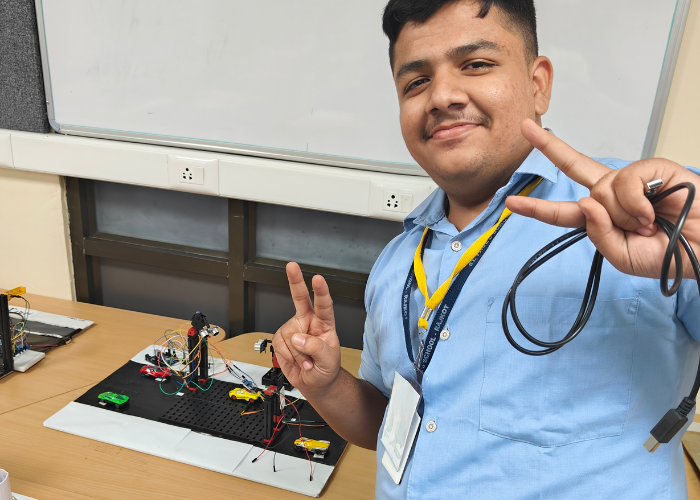
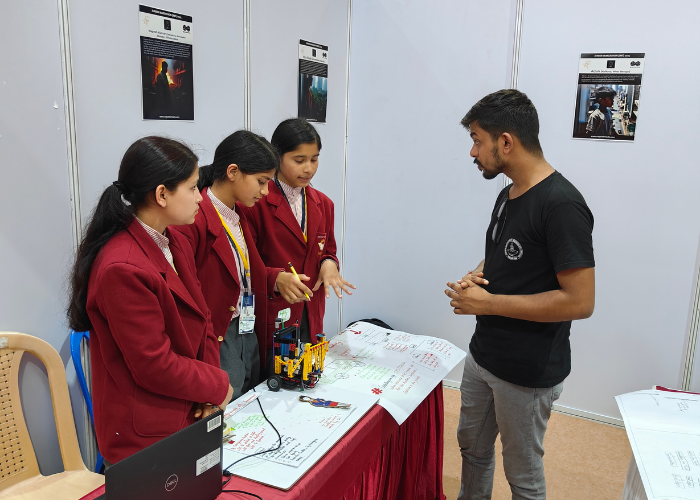
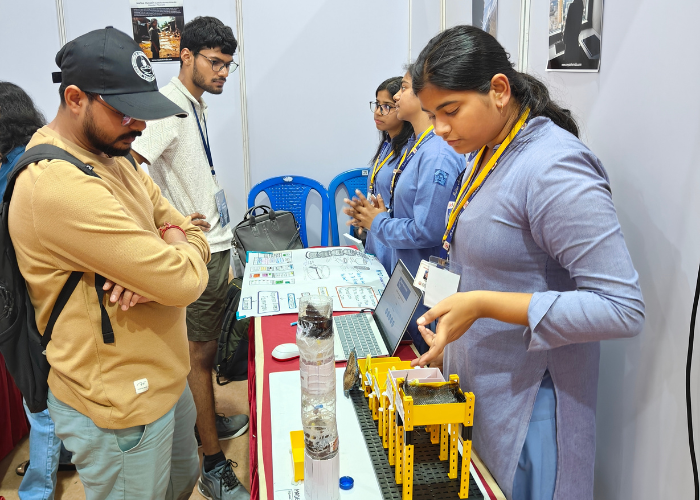
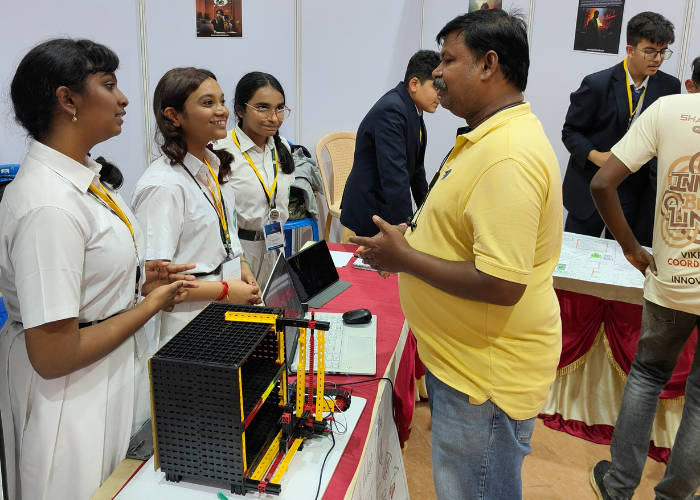
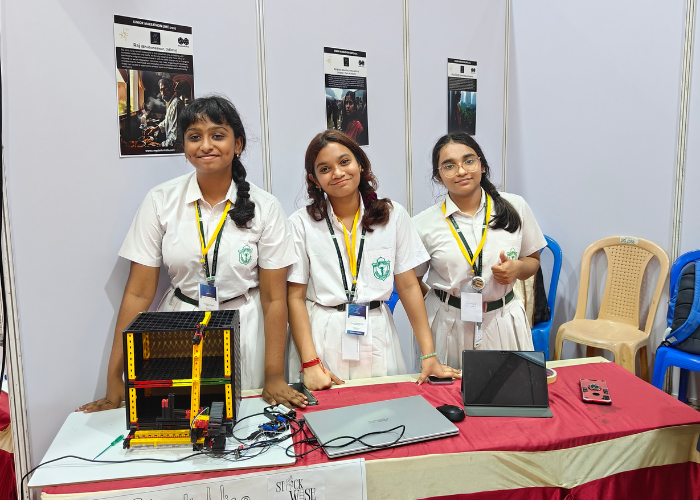
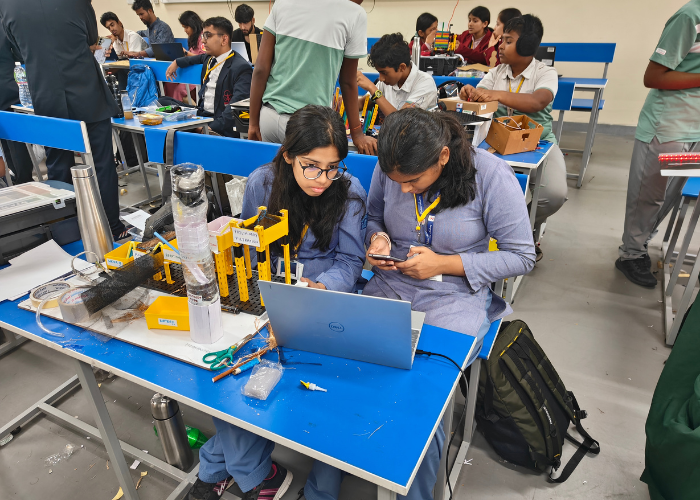
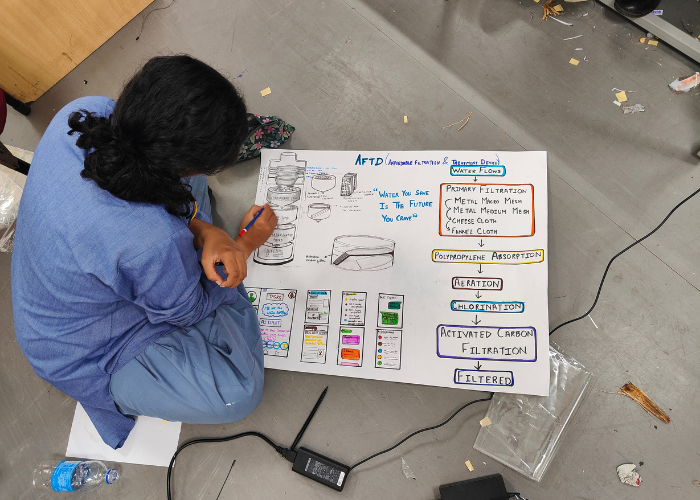
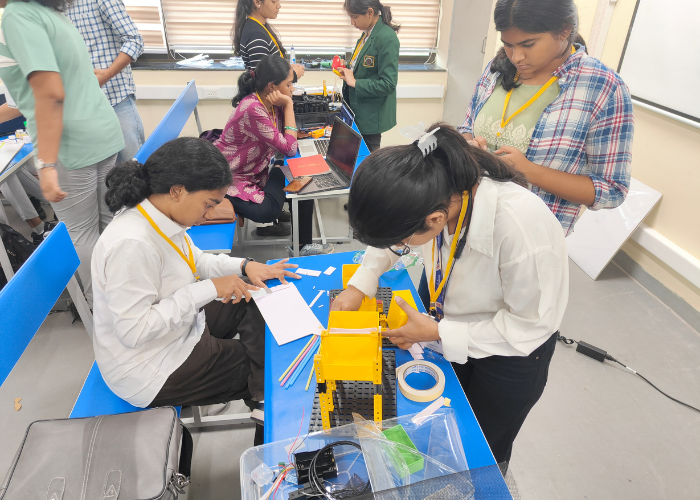
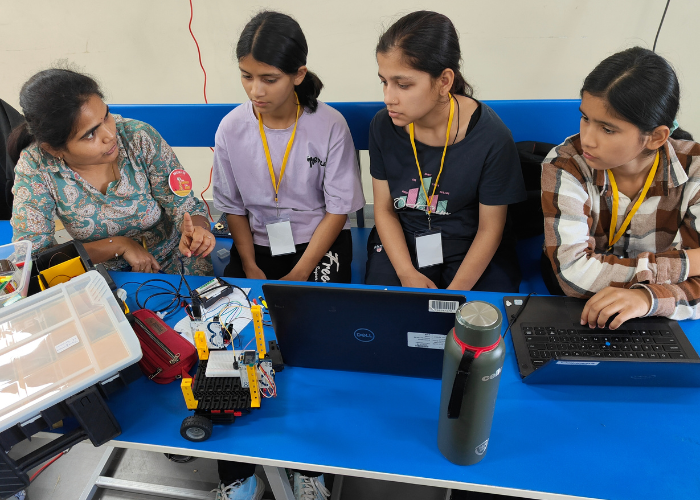
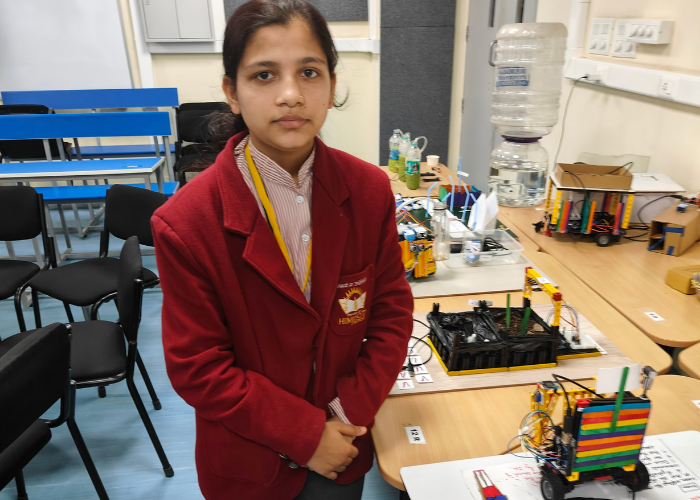
Glimpses of our Previous Editions
Curated By

Organised By

Event By

Event By

© 2024 Creya Learning & Research Pvt. Ltd.
All Rights Reserved